
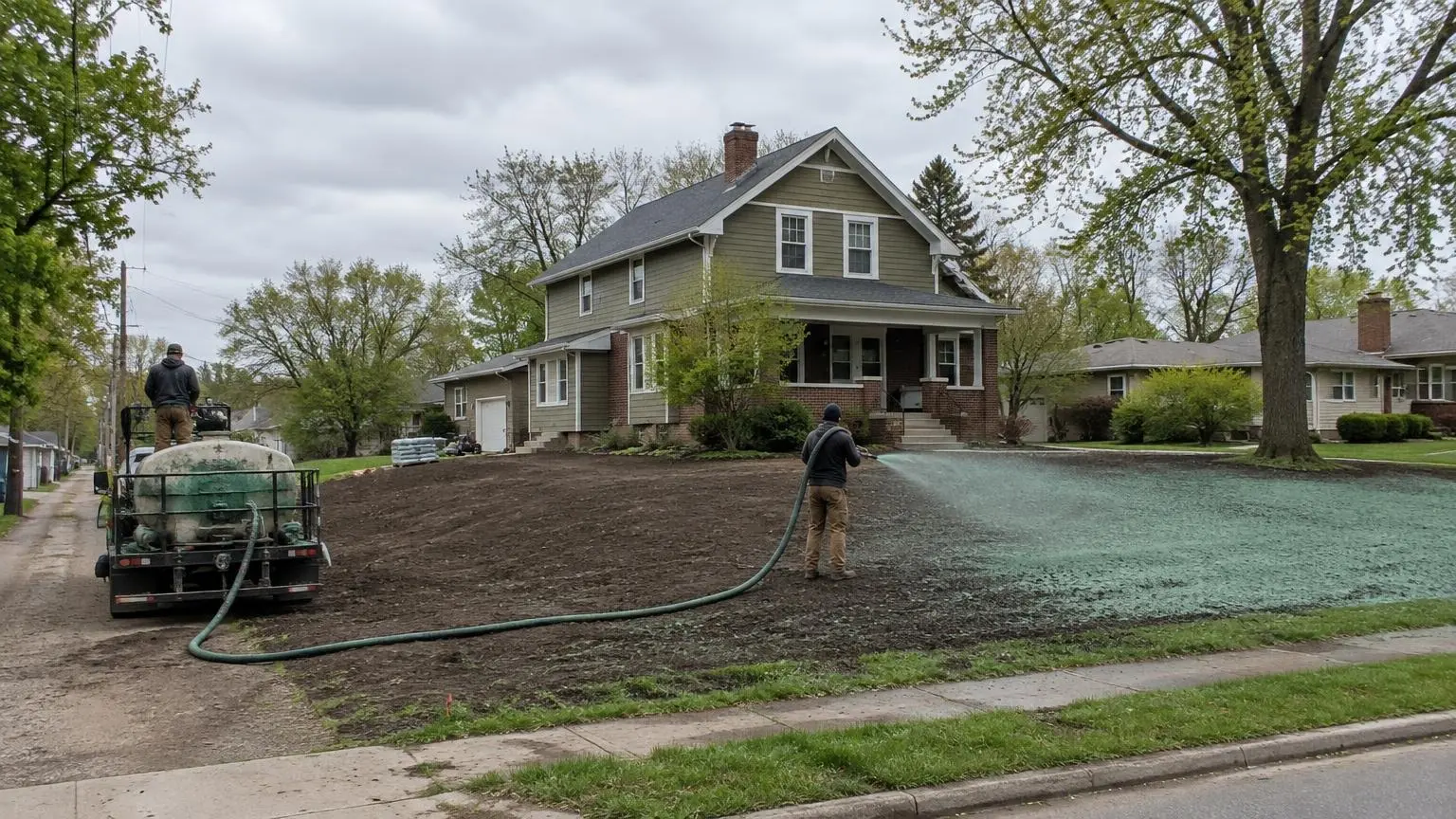
The part under the grass
Yard Grading & Topsoil Prep in Minneapolis, MN
Shaping, loosening and topping the soil so new grass drains, roots and stays level.
- We walk the site with you before we price anything
- Itemized quotes: seed, mulch, prep and erosion control on separate lines
- Seed mixes chosen for your sun, shade and foot traffic
Getting the Ground Right Before Any Seed
Yard grading and topsoil prep is the dirt work underneath a new lawn, and it sets how well that lawn does for years. In Minneapolis we grade yards after teardowns and additions, fix low spots that hold water against a foundation, reshape lots where builders left ruts and mounds, and spread topsoil where the original layer was scraped away. Most of this ends with hydroseed or sod, but we also take on land grading for homeowners who want a yard regraded now and seeded later.
Flat ground needs careful grading
Minneapolis sits on relatively flat terrain, and a lot of city yards have very little natural fall. That means water goes wherever the grading tells it to. Ground should slope away from the house, low spots should have somewhere to drain, and the finished surface should match sidewalks, driveways and the neighbors' yards. We set grades with a level and string, not by eye, and check them before topsoil goes on.
What topsoil is doing
The dark surface layer in local soils is shallow. On the Waukegan soils of the outwash areas it is black silt loam about a foot deep; on the Lester soils of the till plains it is a dark loam surface of 15 to 25 centimeters over brown clay loam, according to the USDA. When a lot is excavated and regraded, that dark layer is often buried, mixed or hauled away, and what remains is subsoil. Grass will grow in subsoil, but slowly and thinly. Adding a layer of good topsoil gives roots a place to start and holds water better near the surface.
Rough and fine grading
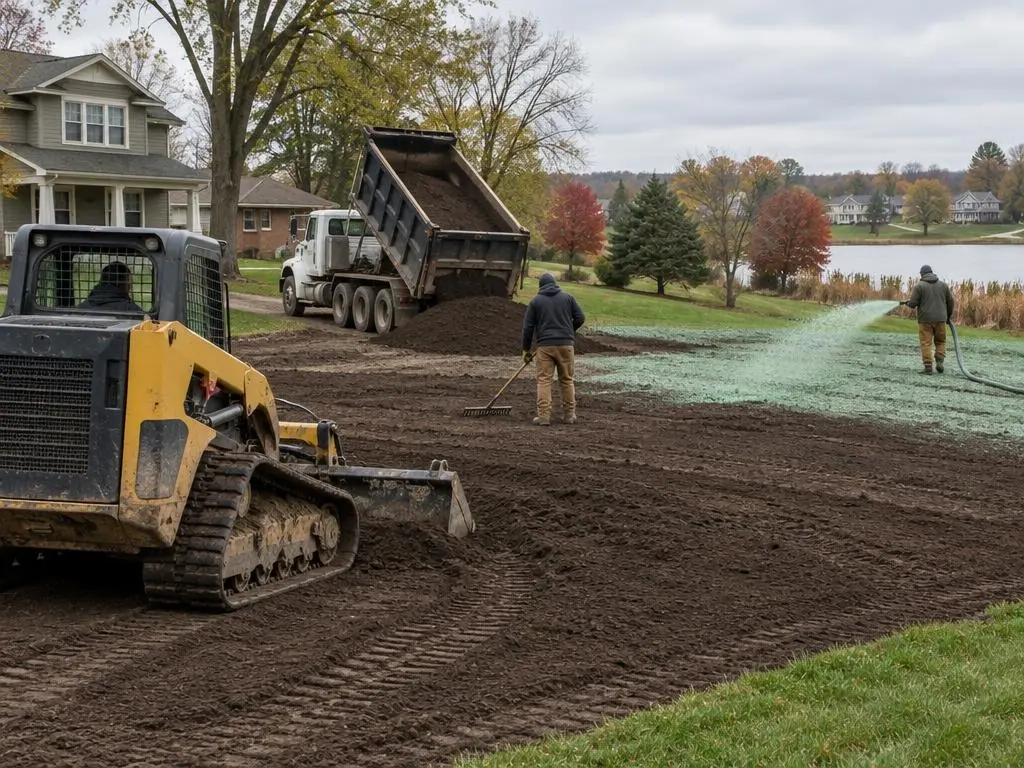
Rough grading shifts bigger volumes of soil to establish the overall shape: cutting high spots, filling low ones and building swales. Fine grading is the last pass: raking out rocks and clods, smoothing small bumps, firming the surface so it does not settle unevenly, and setting the final elevation an inch or so below walks and drives so the turf sits flush. Extension recommends firming the soil slightly with a roller before seeding; we do that on every job. Finished grade matters most at the edges. Where new lawn meets an old walk, a patio or a neighbor's yard, a small lip or dip shows up for years. We feather those transitions by hand, check them with a straightedge, and leave the soil loose enough on top for seed to settle into but firm enough that a footprint does not sink more than about a quarter inch. That is the surface that hydroseed, dry seed and sod all do best on, and it is the step most often rushed.
Drainage dirt work
Some drainage problems are solved by grading alone. Others need a buried line, a dry well or a swale lined with rock. Our crews also take on excavation and trenching when a drain line or downspout extension is part of getting the yard to drain, and utility locates are requested before any trench goes in. If a problem needs foundation or sewer work, we will tell you and leave that to the specialists.
Permits and soil
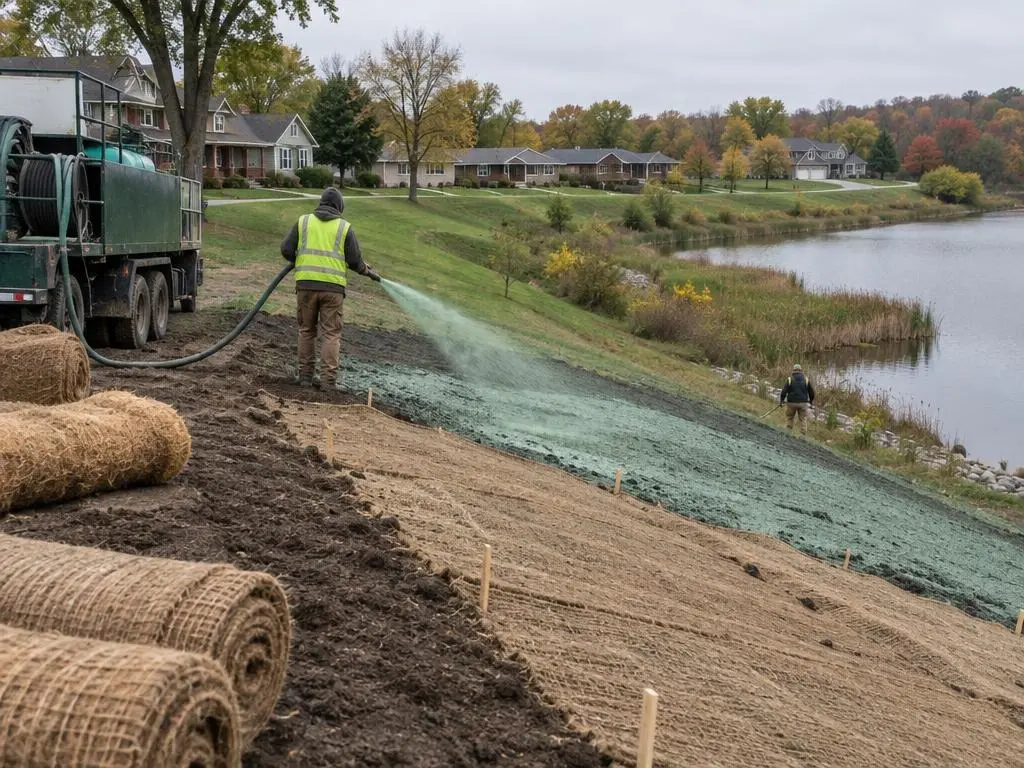
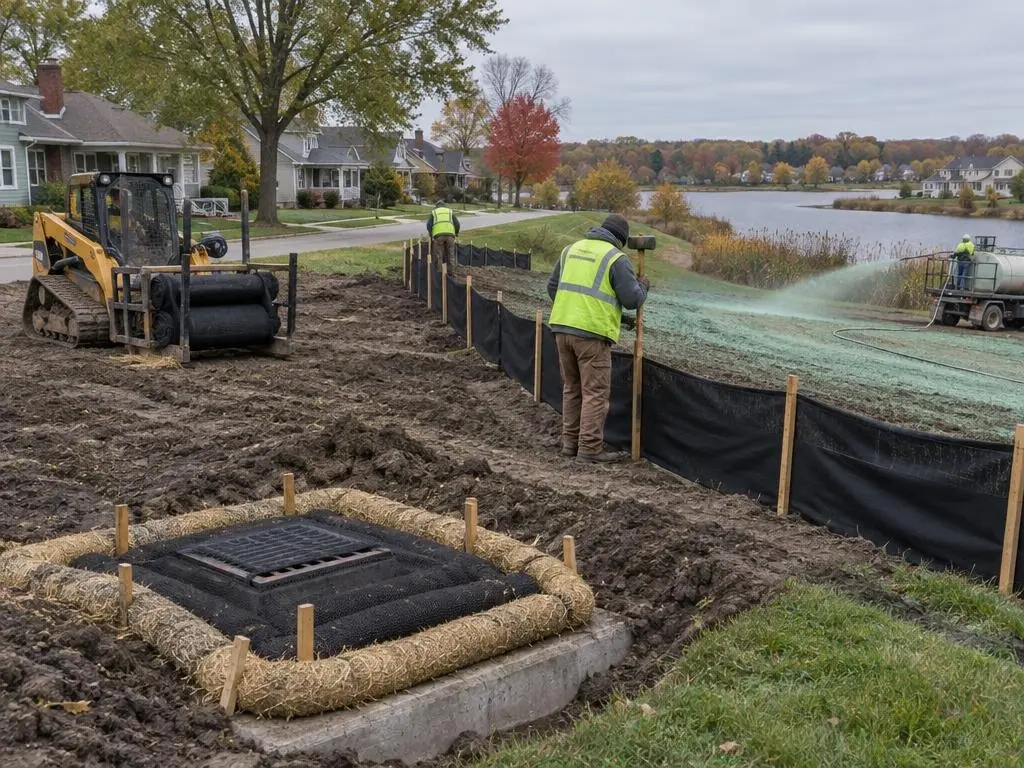
Regrading a Minneapolis yard is land disturbance. If the work moves more than 500 square feet or 5 cubic yards of soil, the city's erosion and sediment control permit applies, and over 5,000 square feet an erosion control plan is required. Larger regrades usually need silt fence on the downhill side until the new grass is in. We can handle the grading, the fence and the seeding as one job, so the yard is never left bare longer than it has to be.
Teardowns and additions
A large share of our grading work follows other construction. When an old house comes down, the excavator leaves a mix of compacted subsoil, broken concrete and debris where a lawn will go. Additions and garage rebuilds leave ruts and spoil. Before anything is seeded, that ground has to be cleaned up, loosened and reshaped. We remove what should not be in a lawn, rip compacted areas, set the grade, and bring in topsoil to replace what was lost. Homeowners often ask why the builder did not do this; usually the builder's contract ended at rough grade, and finish work was always meant to be a separate job.
Topsoil quality
Not all topsoil is the same. Screened material without clods, roots or construction debris spreads evenly and lets us set a smooth grade. Very sandy fill drains well but holds little water for new seed. Very heavy material crusts after rain. We source screened topsoil, spread it to a set depth and blend the bottom of it into the subsoil so roots do not stop at a sharp layer, the same rooting problem Extension warns about with sod laid over mismatched soil. If you are buying topsoil yourself, we can tell you how much the area will take and what to look for.
Grading and Soil Work
Everything that happens before the grass goes down.
Rough grading
Cutting and filling to set slope away from the house and toward drainage.
Fine grading
Raking, smoothing and firming the final surface for seed or sod.
Topsoil delivery and spreading
Screened topsoil brought in and spread to a set depth.
Low-spot repair
Filling settled areas and puddle spots, then regrading.
Swales
Shallow channels that carry water around the house and off the lot.
Drain trenching
Trenches for downspout and yard drain lines tied into the grading plan.
Grading and Topsoil: Published Ranges
| Work | Published range |
|---|---|
| Yard leveling, per sq ft (HomeAdvisor) | $1 to $2 |
| Fine grading, per sq ft (Lawn Love) | $0.08 to $1.00 |
| Resloping a residential yard (Lawn Love) | $770 to $3,000 |
| Topsoil, per cubic yard, material (Angi) | $10 to $55 |
| Delivery of topsoil, one load of up to 15 cu yd (Angi) | $50 to $150 |
| Grading labor, per hour (HomeAdvisor) | $50 to $100 |
National ranges from the guides named in each row. The amount of soil moved, access for equipment and the depth of topsoil set the actual cost. You pay what the signed quote says.
Grading Step by Step
1. Look at the water
We note where water sits and where it should go.
2. Mark it out
Utility locates requested; grades marked with stakes and string.
3. Rough grade
Soil cut and filled to set the slope.
4. Topsoil
Topsoil spread and blended into the surface.
5. Fine grade and firm
Surface raked, rolled and ready for seed or sod.
Why Choose Us for Yard Grading & Topsoil Prep
Measured grades
Slope away from the house is set with a level, not guessed.
Seed-ready finish
We finish the surface the way our own seeding crew wants it.
One crew for the whole job
Grading, fence and seed can be scheduled together.
Yard Grading & Topsoil Prep Questions
What depth of topsoil should go under new grass?
It depends on what is there now. Where the dark surface layer was stripped, a few inches of topsoil blended into the subsoil makes a big difference for new roots. We check the soil during the site walk and quote a depth.
Water sits next to our house after rain. Can grading fix that?
Often it can. We reshape the yard so it slopes away from the foundation, and add a swale or drain line where needed. If the real problem is the foundation or a sewer line, we will tell you.
Is a permit needed to regrade my yard?
In Minneapolis, if the work disturbs more than 500 square feet or 5 cubic yards of soil, an erosion and sediment control permit is required.
Do you haul away extra dirt?
On small jobs we spread it on site where it helps the grade. Larger amounts can be hauled; that is a separate line on the quote.
Yard Grading & Topsoil Prep Service Areas
- Hydroseeding in Minneapolis, MN
- Hydroseeding in Plymouth, MN
- Hydroseeding in Maple Grove, MN
- Hydroseeding in Eden Prairie, MN
- Hydroseeding in Bloomington, MN
- Hydroseeding in Edina, MN
- Hydroseeding in Minnetonka, MN
- Hydroseeding in Woodbury, MN
- Hydroseeding in Blaine, MN
- Hydroseeding in Lakeville, MN
- Hydroseeding in Shakopee, MN
- Hydroseeding in Chanhassen, MN
- Hydroseeding in Prior Lake, MN
- Hydroseeding in Apple Valley, MN
- Hydroseeding in Burnsville, MN
- Hydroseeding in Eagan, MN
- Hydroseeding in Savage, MN
- Hydroseeding in Chaska, MN
- Hydroseeding in Rosemount, MN
- Hydroseeding in Cottage Grove, MN
- Hydroseeding in Brooklyn Park, MN
- Hydroseeding in Rogers, MN
- Hydroseeding in Lino Lakes, MN
Get a Yard Grading & Topsoil Prep Estimate
Book a site walk for your yard grading.