
Cul-de-sacs and lakeshore
Hydroseeding in Plymouth, MN
Former farm country west of Minneapolis, now curving streets and lake lots.
- We walk the site with you before we price anything
- Itemized quotes: seed, mulch, prep and erosion control on separate lines
- Seed mixes chosen for your sun, shade and foot traffic
Lawns on Plymouth's Curving Streets
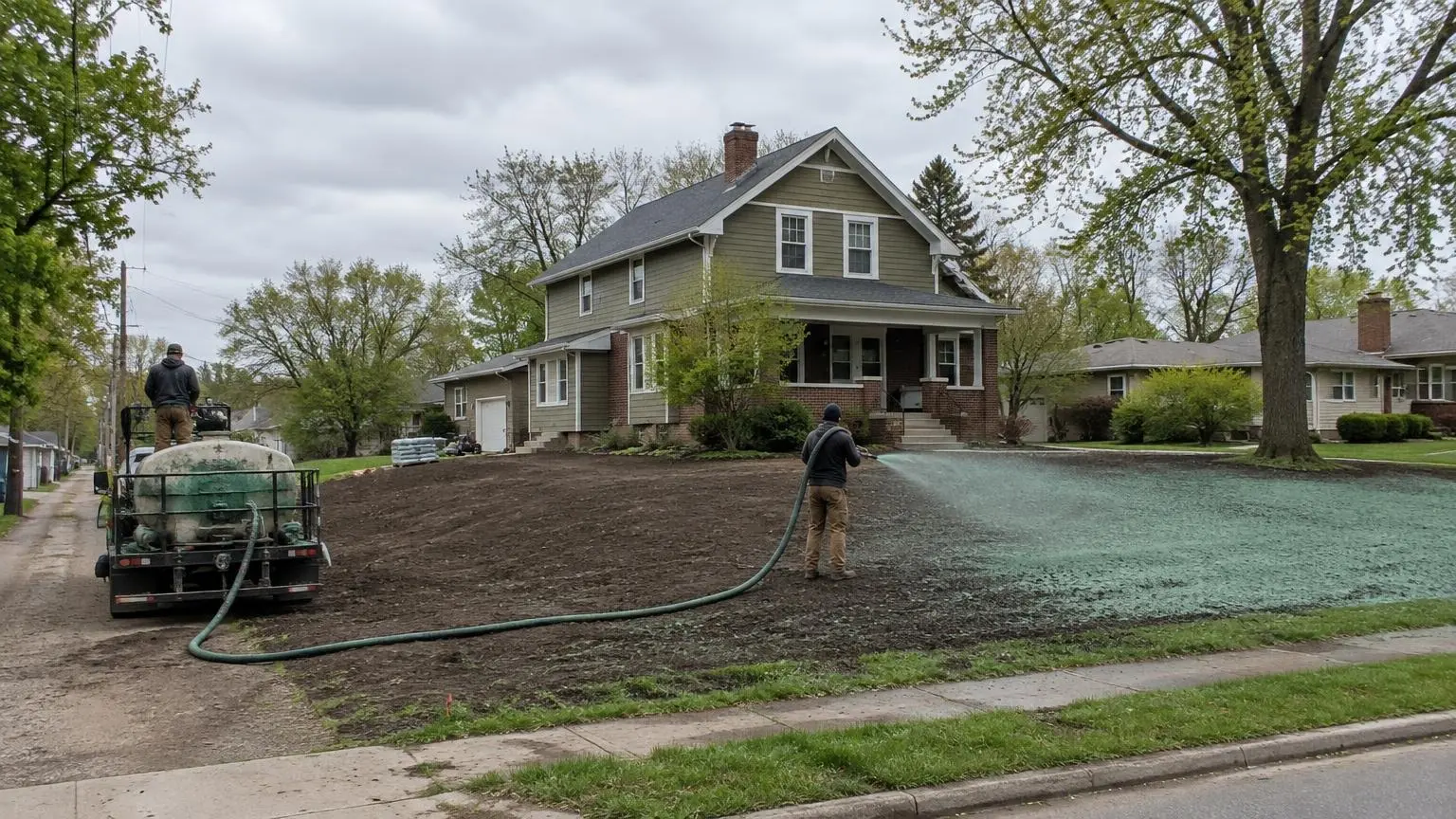
Hydroseeding in Plymouth often means odd-shaped yards. The city's public works crews maintain 863 cul-de-sacs, and a pie-shaped lot on a bulb with a steep curb cut is hard to sod neatly. A sprayed slurry follows every curve and corner, so the new lawn fits the lot rather than the other way around.
From farm fields to neighborhoods
Farming was Plymouth's main way of life until the mid-1900s, and the village did not incorporate until 1955. Much of the ground under today's subdivisions was plowed for a century first. That history usually leaves a decent loam below the builder fill, but the top few inches on a new home site are often subsoil spread during grading. We check what is on the surface and bring in topsoil where the seedbed is too thin to hold moisture.
Lake country
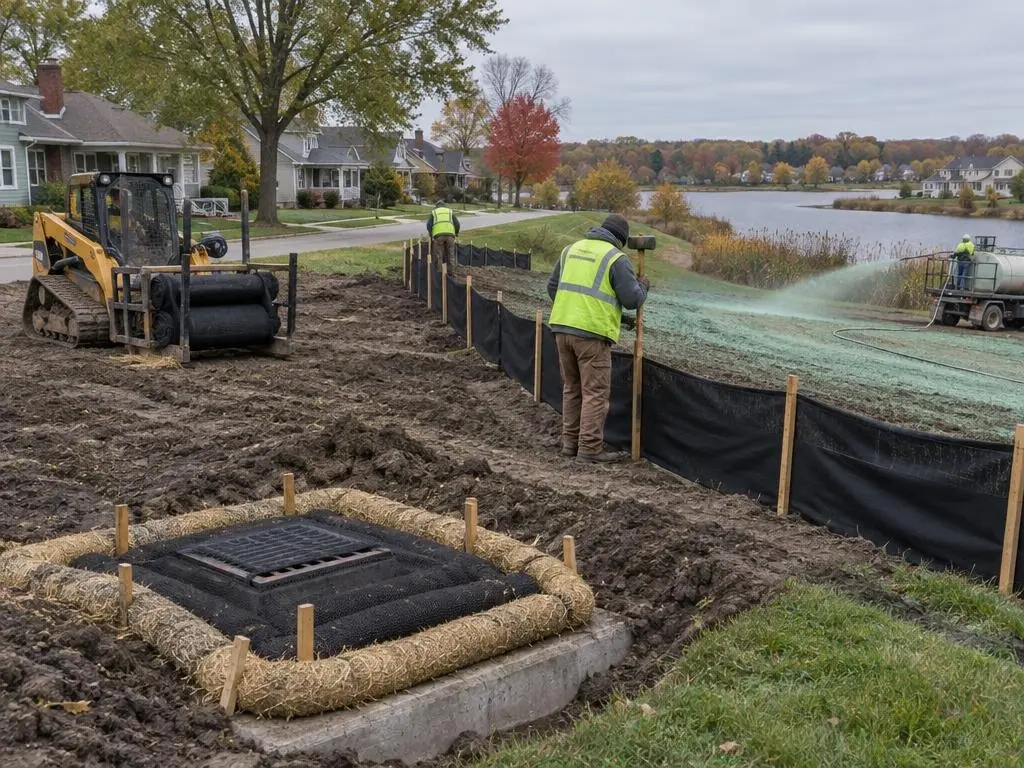
Plymouth covers about 35 square miles, and 2.65 of them are water. Medicine Lake, Parkers Lake and smaller basins mean many back yards slope toward a shoreline. For those lots we lay out erosion control first: silt fence or a sediment log at the toe, then hydromulch with a tackifier on the face of the slope, and straw blankets on anything steep.
A lesson from 1857
The first town site sat on the shore of Parkers Lake, and when the lake flooded in the spring of 1857 the gristmill had to be taken down and moved to Wayzata. Water levels near lakes still rise in wet springs. We keep fine grading and seed lines above the normal high water mark and avoid leaving bare soil where a high lake can reach it.
Cul-de-sac drainage
A bulb at the end of a street collects runoff from every driveway around it. When we grade those yards, we shape a gentle swale that carries water to the storm inlet and, during construction, put inlet protection on the catch basin so sediment stays out of the pipe.
Get a free estimate or phone (612) 285-3572 about your Plymouth yard.
Plymouth Land and Water Notes
- Cul-de-sacs. Plymouth has 863 cul-de-sacs and about 300 miles of city streets, which makes curved, irregular lawn shapes common.
- Water area. Of Plymouth's 35.33 square miles, 2.65 square miles are water, including Medicine Lake and Parkers Lake.
- Early flood. When Parkers Lake flooded in spring 1857, the town's first gristmill was taken down and moved to Wayzata.
- Farming past. Farming was Plymouth's dominant occupation until the mid-1900s; it incorporated as a village in 1955.
Plymouth Questions
Is hydroseed a good fit for a pie-shaped cul-de-sac lot?
Yes. The spray covers curves and narrow points without the cutting and seams sod needs, so odd shapes are easy.
My yard drops toward Medicine Lake. What stops soil from washing into it?
We install a sediment barrier at the bottom, use a heavier hydromulch with tackifier on the slope and add blankets on the steepest parts.
Do Plymouth builder lots usually need topsoil?
Often. Grading tends to leave subsoil on top, and a thin seedbed dries out fast. We check depth on site before quoting.
Can you protect the storm drain at the end of our street while the yard is bare?
Yes. Inlet protection on the catch basin is a standard part of our sediment control work.
How soon can kids play on the new lawn?
Light use after the second or third mowing is usually fine. Heavy play should wait until the turf is well rooted.
Free Estimates in Plymouth, MN
Send a few photos of your Plymouth yard and we will follow up.
Hydroseeding Near Plymouth
- Hydroseeding in Minneapolis, MN
- Hydroseeding in Maple Grove, MN
- Hydroseeding in Eden Prairie, MN
- Hydroseeding in Bloomington, MN
- Hydroseeding in Edina, MN
- Hydroseeding in Minnetonka, MN
- Hydroseeding in Woodbury, MN
- Hydroseeding in Blaine, MN
- Hydroseeding in Lakeville, MN
- Hydroseeding in Shakopee, MN
- Hydroseeding in Chanhassen, MN
- Hydroseeding in Prior Lake, MN
- Hydroseeding in Apple Valley, MN
- Hydroseeding in Burnsville, MN
- Hydroseeding in Eagan, MN
- Hydroseeding in Savage, MN
- Hydroseeding in Chaska, MN
- Hydroseeding in Rosemount, MN
- Hydroseeding in Cottage Grove, MN
- Hydroseeding in Brooklyn Park, MN
- Hydroseeding in Rogers, MN
- Hydroseeding in Lino Lakes, MN