
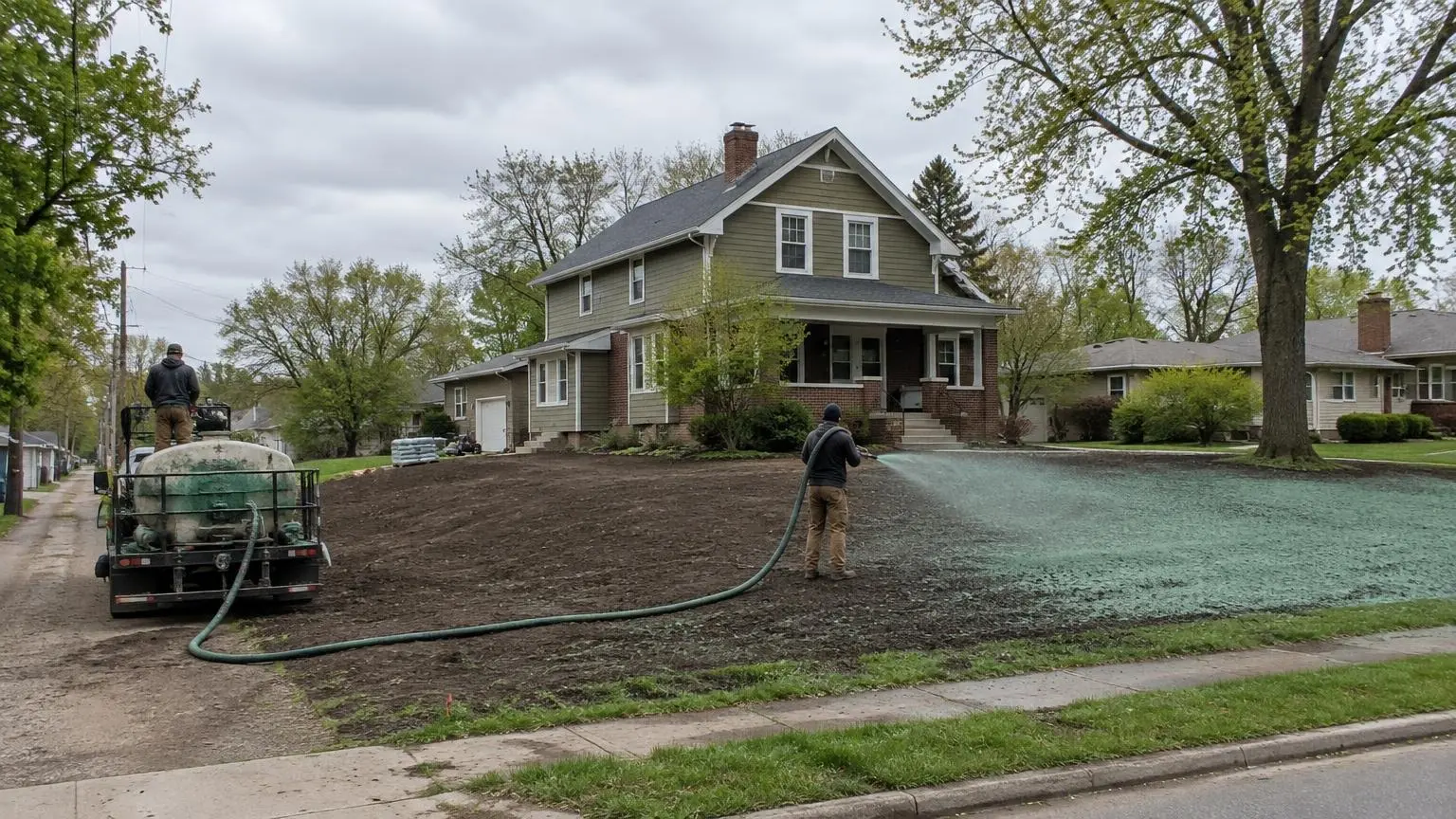
Lots, ponds and open ground
Builder & Commercial Hydroseeding in Minneapolis, MN
Seed and mulch for construction sites that need cover fast and an inspector's sign-off.
- We walk the site with you before we price anything
- Itemized quotes: seed, mulch, prep and erosion control on separate lines
- Seed mixes chosen for your sun, shade and foot traffic
Seeding Work That Answers to a Permit
In Minneapolis, builder and commercial hydroseeding deals with the ground construction leaves behind: finished home lots waiting for a buyer, the slopes and bottoms of stormwater ponds, boulevards after a utility job, the open areas around a new office or apartment building, and phases of a subdivision that are graded but not yet built. General contractors and developers usually call hydroseeding contractors for two reasons. They need permanent turf on finished areas, and they need temporary cover on bare soil to keep it on site and out of the storm drains.
Deadlines set by the state permit
On projects that disturb an acre or more, Minnesota's construction stormwater permit sets the clock. The MPCA timeline table says soil stabilization must begin immediately when construction in an area has stopped and will not resume for 14 days, and must be complete within 14 days. Where the site drains to a special or impaired water, that window shrinks to 7 days. The last 200 feet of a ditch that connects to a surface water must have its wetted perimeter stabilized within 24 hours. Those are the deadlines our schedule is built around on construction sites.
And by the city
Inside Minneapolis, Chapter 52 of the city code requires an erosion and sediment control permit for any disturbance over 500 square feet, including utility excavations and demolitions, and an approved plan over 5,000 square feet. The permit has to be posted at the site. Sites over an acre also need a stormwater management plan under Chapter 54. Suburban cities have their own versions. We work from the approved plan and the stabilization notes on it, and we keep the records of what was seeded and when so the site manager can show them during inspections.
Temporary versus permanent cover
Not every bare area needs a lawn. A stockpile that will be moved in spring, a pad waiting for a second phase, or a slope that will be regraded later only needs to stop eroding for a while. For those, we spray a fast-establishing temporary seed mix with mulch, or mulch alone, which is less expensive than a full turf mix. Finished lots, boulevards and pond slopes get the permanent mix the plans call for, whether that is a bluegrass and fescue turf blend or a native grass seeding mix for pond edges and open space.
Volume and access
On large areas, hydroseeding is mostly about water and access. A truck-mounted machine covers acres in a day if it can get close and refill quickly. We plan where the truck will park, where it will fill, and how far the hose has to reach for back lots and pond slopes. For lots spread across a subdivision, we can come back in rounds as each block is finished rather than waiting for the whole phase.
Getting on the calendar
The hard part of booking seeding is getting a crew on site when the grade is done, not two weeks later. Late summer is our busiest stretch, because Extension's mid-August to mid-September seeding window lines up with the end of the building season. If you have lots finishing in August and September, get them on our calendar in July. Frozen ground in November ends the season for seed; after that, the conversation turns to dormant seeding, mulch and blankets.
What builders ask us
General contractors comparing hydroseeding companies usually want to know three things: how soon we can be on site, whether we will seed the lot in pieces as it is finished, and whether the seed will still be there after the first storm. Our answer to the first depends on the calendar, which is why we ask for finish dates early. The answer to the second is yes; we would rather seed a finished lot now than leave it bare for a month. The third depends on prep and mulch rate. On builder-graded clay loam with no topsoil, a light slurry sheets off in a downpour. We raise the mulch rate, add tackifier, and recommend blankets on any swale or slope that carries water.
Native seed for open space
Pond buffers, infiltration basins and open space on commercial sites are often specified with native grass seeding rather than turf. The USDA notes that the native vegetation on the outwash soils south of the metro, such as the Waukegan series, was tall grass prairie: big bluestem, indiangrass and switchgrass. Native mixes like those are slower to show than turf grass and look thin in their first year while they build roots, so they usually go down with a fast-growing cover crop in the slurry. We spray whatever the landscape architect or the watershed district specifies, and we flag the difference in establishment time so nobody expects a lawn in the first season.
Site Work We Handle
From one spec home to a full phase of a development.
Finished home lots
Permanent turf mix on lots ready for closing or sale.
Temporary cover
Quick-growing cover seed and mulch on stockpiles and pads that will be disturbed again.
Stormwater ponds
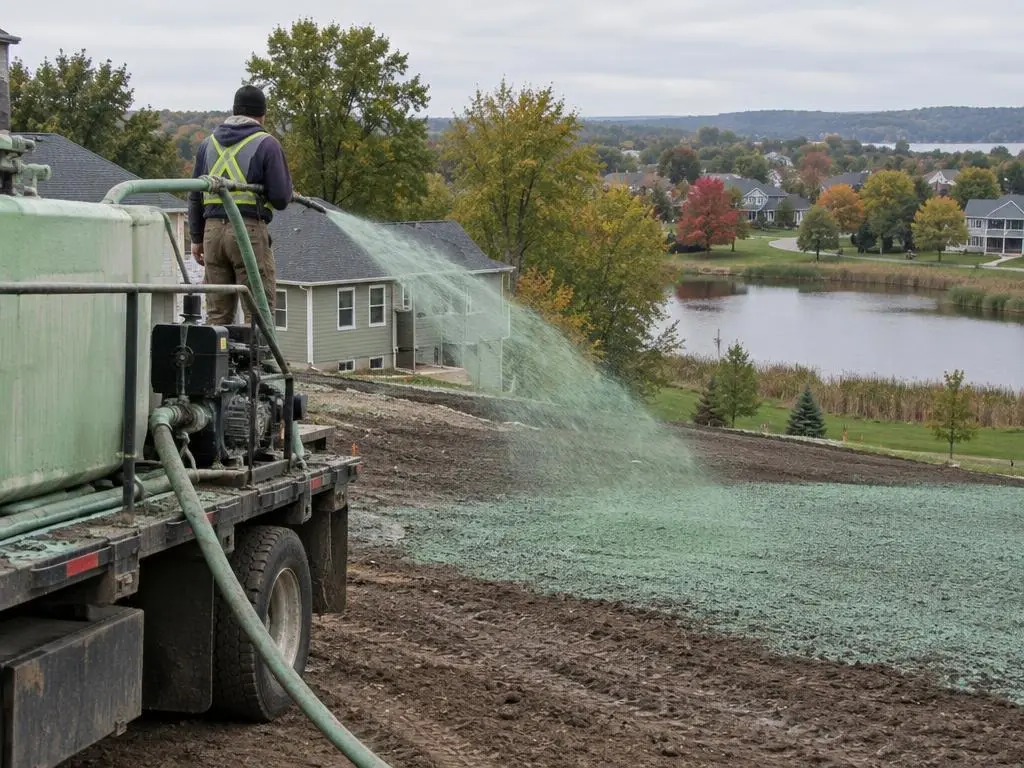
Pond slopes and benches seeded with turf or native mixes per the plan.
Boulevards and utility cuts
Restoration seeding after sewer, water and street work.
Ditches and swales
Seed and mulch, with blankets where flow is concentrated.
Large open areas
Multi-acre seeding with a truck-mounted machine.
Seeding records
Dates, areas and mixes logged for your inspection file.
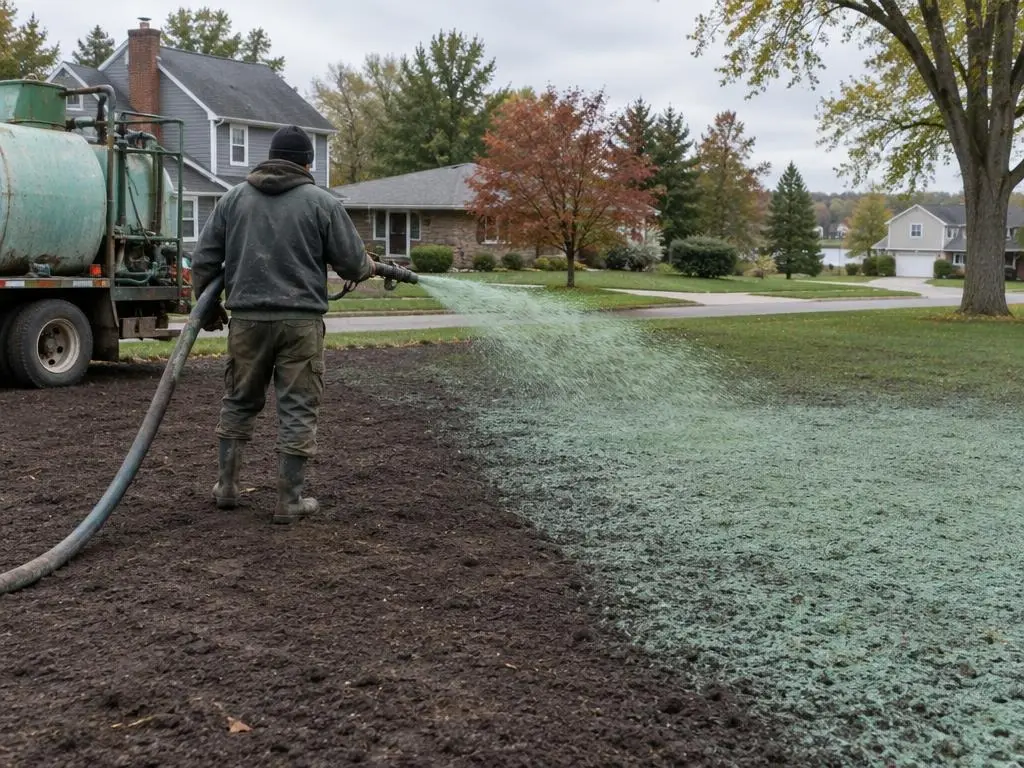
Large-Area Hydroseeding: Published Figures
| Scope | Published range |
|---|---|
| Per acre, consumer guide (LawnStarter) | $2,136 to $4,897 |
| Per acre, consumer guide (Fixr) | $2,000 to $4,000 |
| One acre (HomeGuide) | $5,000 to $8,500 |
| One acre (HomeAdvisor) | $2,600 to $8,700 |
| 2023 public bids, North Little Rock, AR park reseeding | $2,595 and $3,325 per acre |
These are figures from the named guides and one 2023 public bid, not local contract prices. Mix, mulch rate, access and water supply change the price on site work. The figure on the signed proposal is what you pay.
How a Site Job Runs
1. Plan review
We read the erosion control plan, seeding specs and phasing with you.
2. Site visit
Access, water source, slopes and sensitive areas are checked.
3. Proposal
Priced by area and mix, with temporary and permanent seeding separated.
4. Seed in rounds
Areas are seeded as they are finished, inside the permit's time limits.
5. Records
We send dates, locations and mixes for your inspection log.
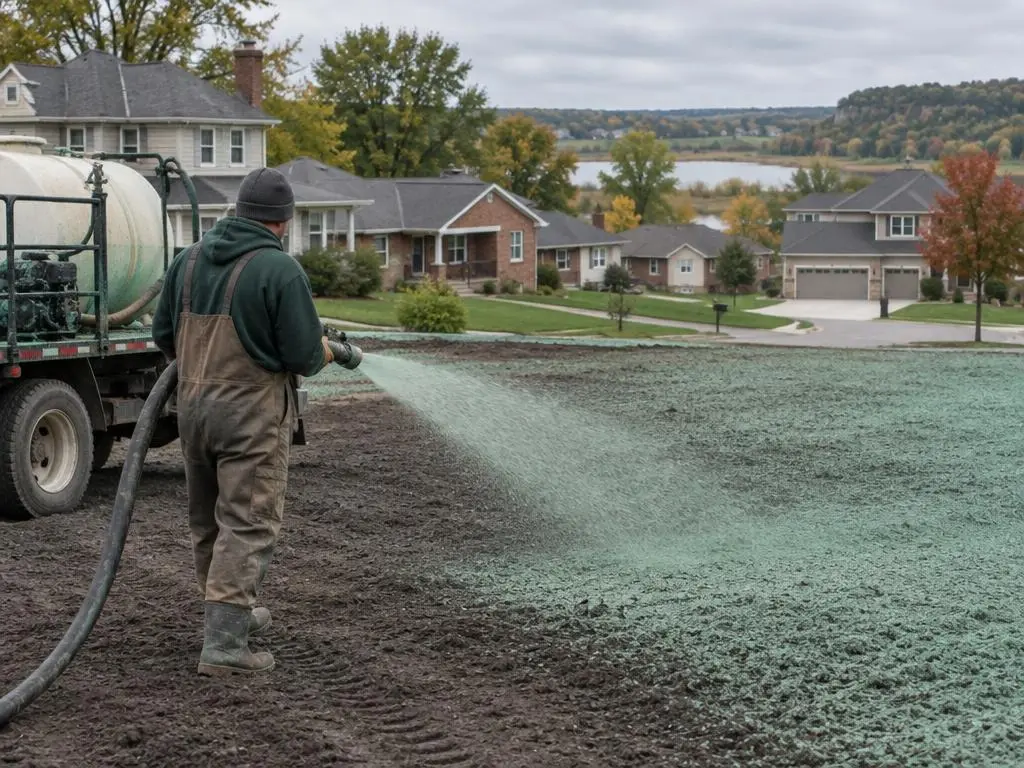
Why Choose Us for Builder & Commercial Hydroseeding
We know the clock
We plan around the 7 and 14 day stabilization limits in the state permit.
Temporary and permanent
We do not sell turf mix where temporary cover is all the site needs.
Rounds, not one visit
Lots get seeded as they finish, so they are not left bare waiting for the rest.
Builder & Commercial Hydroseeding Questions
What do hydroseeding contractors charge per acre?
For typical work, consumer cost guides range from about $2,000 to $4,900 an acre, and some run higher for full-service jobs. Public bids we have seen for a 2023 park project came in near $2,600 to $3,300 per acre. Your site's mix, access and water source set the actual number.
How fast do you need to seed after grading stops?
Under the state construction stormwater permit, stabilization starts immediately when work in an area stops for 14 days and must be finished within 14 days, or 7 days near special or impaired waters. Your plan may set tighter limits.
Can you seed stormwater ponds with native mixes?
Yes. Many pond plans call for native grass or wetland edge mixes rather than turf. We spray whatever mix the plan specifies, often with a heavier mulch rate on the slopes.
Do you seed in November?
Once the ground is frozen, seed does not establish. Late in the season we use mulch, blankets or dormant seeding methods depending on the plan and what the inspector will accept.
Builder & Commercial Hydroseeding Service Areas
- Hydroseeding in Minneapolis, MN
- Hydroseeding in Plymouth, MN
- Hydroseeding in Maple Grove, MN
- Hydroseeding in Eden Prairie, MN
- Hydroseeding in Bloomington, MN
- Hydroseeding in Edina, MN
- Hydroseeding in Minnetonka, MN
- Hydroseeding in Woodbury, MN
- Hydroseeding in Blaine, MN
- Hydroseeding in Lakeville, MN
- Hydroseeding in Shakopee, MN
- Hydroseeding in Chanhassen, MN
- Hydroseeding in Prior Lake, MN
- Hydroseeding in Apple Valley, MN
- Hydroseeding in Burnsville, MN
- Hydroseeding in Eagan, MN
- Hydroseeding in Savage, MN
- Hydroseeding in Chaska, MN
- Hydroseeding in Rosemount, MN
- Hydroseeding in Cottage Grove, MN
- Hydroseeding in Brooklyn Park, MN
- Hydroseeding in Rogers, MN
- Hydroseeding in Lino Lakes, MN
Get a Builder & Commercial Hydroseeding Estimate
Send us the plans and the finish dates.